Warm minimalist interior design: fewer things, more material

A warm minimalist home is not an empty home. It is a home that keeps only what belongs there, and what stays is made of materials that feel good to touch: veined stone, oak and walnut, linen, soft plaster, and daylight passing through a sheer curtain. It is a language that gives up clutter without giving up warmth.
In short: warm minimalist interior design rests on a restrained palette of warm tones, a few natural materials repeated throughout the home, straight lines softened by a handful of curves, and quiet light: natural by day, warm and hidden by night. This guide breaks the language into its parts, explains how it differs from cold minimalism and from Japandi, and shows how to apply it room by room. It is also the language that recurs in the studio’s renders, so every example here is taken from them.
If you are already planning a whole home, here is the studio’s interior design service for apartments and homes.
What is warm minimalism in interior design?
Warm minimalism is an approach to interior design that combines the order and restraint of minimalism with natural materials, warm tones and soft light. Instead of white, glossy surfaces it uses wood, stone, fabric and texture. The aim is a calm, ordered space that still feels like a home rather than a showroom.
Classic minimalism asked how much could be taken away. Warm minimalism asks a different question: what has to stay for the space to feel complete? The answer is almost always material. When a room holds only a few things, every surface is seen. The quality of the wood, the direction of the veins in the stone and the texture of the fabric do the work that accessories do in other styles.
The five elements of the language
- A restrained palette. Three or four tones for the whole home: off-white or greige for the walls, one or two wood tones, a stone tone, and one dark point that anchors the space.
- Natural materials that repeat. Stone, oak, walnut, linen and plaster. When the same material appears in the kitchen and in the bathroom, it creates continuity, and continuity is what makes a home feel calm.
- Straight against curved. Most lines are straight and clean: handleless fronts, fine shadow gaps, panels to the ceiling. A few curves, such as a headboard wall that rounds off at its end, the soft corner of a table or a round side table, soften everything else.
- Quiet light. Daylight filtered through a sheer curtain, and in the evening warm light from niches, hidden LED strips and low light fittings, not only from the ceiling.
- A few meaningful objects. A ceramic vessel, a book, a candle, an olive branch. Few and chosen, rather than shelves filled for the sake of filling them.

The material palette
These are the six materials that recur in the studio’s renders. Each swatch was cut from a render, so you can also see the material in context.
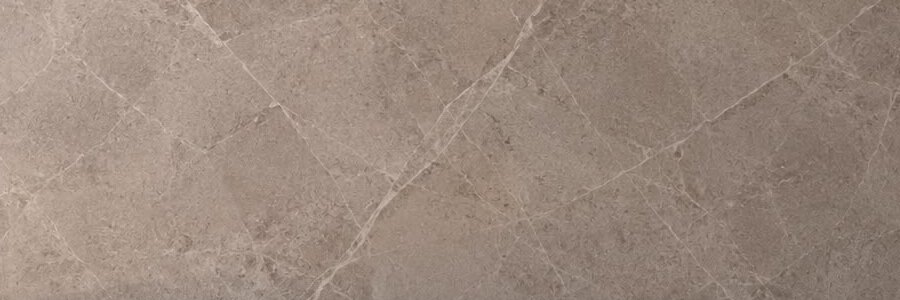
Warm gray veined stone
A monolithic island and niche in the kitchen, a low plinth under the living-room shelving. The pale veins add movement without adding color.
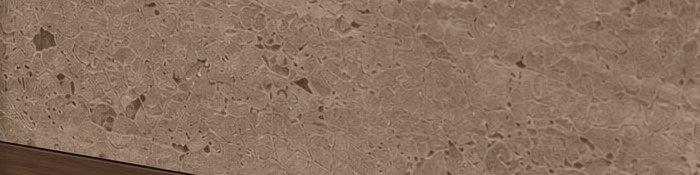
Travertine
A matte, porous, sand-toned stone. Vanities, wall cladding, bedside tables. More in the travertine guide.
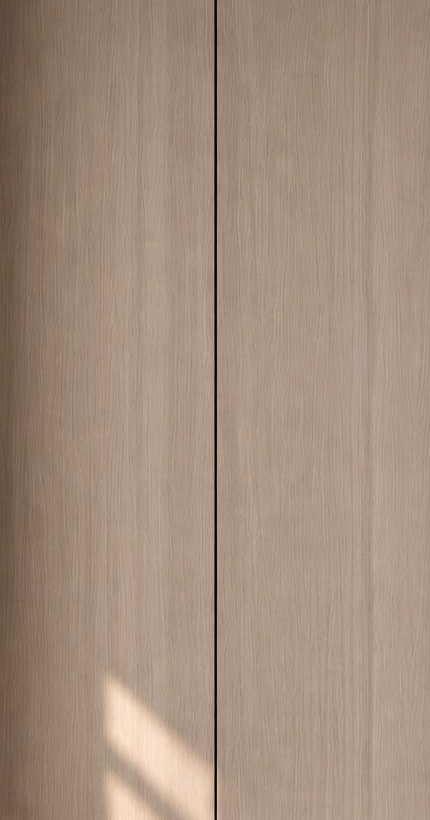
Light oak
The base: wall panels, full-height cabinetry, shelving.

Dark oak
The anchor: a headboard wall, a coffee table.

Walnut
Drawers beneath the stone in the bathroom. Deeper and warmer than oak.
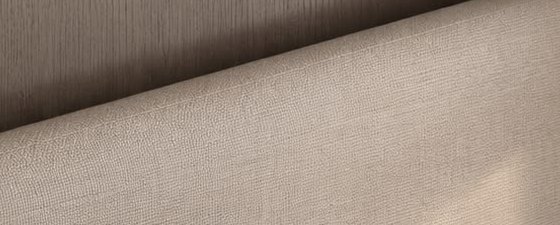
Linen
Bed upholstery, sofas, curtains. The texture that softens the stone.


A helpful rule of thumb: in one space, one light wood, one dark wood and one stone are enough. A fourth material needs a good reason.
How is warm minimalism different from cold minimalism?
The difference is material and light. Cold minimalism relies on bright white, glossy lacquer, chrome and cool-toned lighting, and the result is clean but distant. Warm minimalism keeps the same order and the same clean lines but moves to off-white tones, matte surfaces, textured wood and stone, and light in a warm color temperature.
| | Cold minimalism | Warm minimalism |
|---|---|---|
| Walls | Bright white | Off-white, greige, softly textured plaster |
| Fronts and surfaces | Gloss lacquer, glass | Natural wood, matte stone |
| Metals | Chrome, polished steel | Brushed bronze, brass, matte black |
| Fabrics | Few, smooth | Linen, wool, coarse weaves |
| Light | Cool, mostly from the ceiling | Warm, layered, from several heights |
| Feeling | Gallery | Home |
Both styles are modern, and both like a clean, handleless front. What changes the feeling is what happens when light meets the surface: gloss lacquer reflects it, while matte wood and stone absorb and soften it. That is why warm minimalism is a natural route to modern interior design that doesn’t feel sterile.

Warm minimalism, Japandi and quiet luxury: what’s the difference?
Japandi is a style that merges Japanese and Scandinavian design, with low furniture, pale wood and black accents. Quiet luxury is an attitude of quality without display, not a style. Warm minimalism shares restraint and natural materials with both, but it is not bound to one tradition, and it allows itself veined stone, travertine and bronze.
Japandi grew out of the meeting of two traditions: Japanese simplicity and Scandinavian comfort. It has clear signatures, such as low furniture, pale wood with black accents, handmade ceramics and the idea of wabi-sabi, the beauty of the imperfect. Warm minimalism borrows its calm, but it isn’t tied to a single cultural reference. It can include veined stone, a monolithic travertine surface or a bronze tap, pieces you would not find in a classic Japandi home.
Quiet luxury is not a style at all but a position: quality without logos, real material instead of ornament. Warm minimalism is one way to express it. When there is little, what there is has to be good: a precise finish, a straight joint, and stone whose veins continue from one front to the next.
How to apply warm minimalism, room by room
Living room
Start with one quiet wall, in plaster or oak panels, with the TV set into it so it isn’t the first thing you see. Beside it stands open wooden shelving with widely spaced shelves and few objects. A low stone plinth along the wall draws one horizontal line that ties everything together, and a hidden light strip above it turns it into a soft light source in the evening. A dark-wood coffee table with rounded corners anchors the room, and a sofa in natural fabric softens it. This is how it looks in the living room with oak shelving and a stone plinth.
Kitchen
The kitchen is the easiest room to overload, so it needs the most restraint. Handleless full-height cabinetry makes storage disappear. An island in a single stone, with a continuous front, becomes the room’s central piece of furniture. A backlit stone niche can hold the coffee machine, the sink and everything used every day, so the worktop stays clear. One example is the kitchen with a monolithic stone island, and if you are at the stage of choosing materials, read about choosing a kitchen stone. The language also works in a darker version, as in the dark-oak kitchen with an integrated stone sink: the same restraint, with a deeper anchor.

Bathroom
In a bathroom, choose one material that wraps the space, for example travertine on the wall and the vanity, and set warm wood against it in the drawers. Wall-mounted taps keep the counter clear. Backlit mirrors give soft light at face height instead of harsh light from above. This is how it looks in the bathroom with a double travertine vanity.

Bedroom
This is where the most softness is allowed: a bed upholstered in linen, a dark-wood headboard wall that curves at its end, round stone bedside tables, pendant lights instead of bedside lamps, and a sheer curtain filtering the morning sun. The curve in the wall is the detail that makes the difference: one soft line in a room that is otherwise straight. See the bedroom with a curved dark-oak wall.
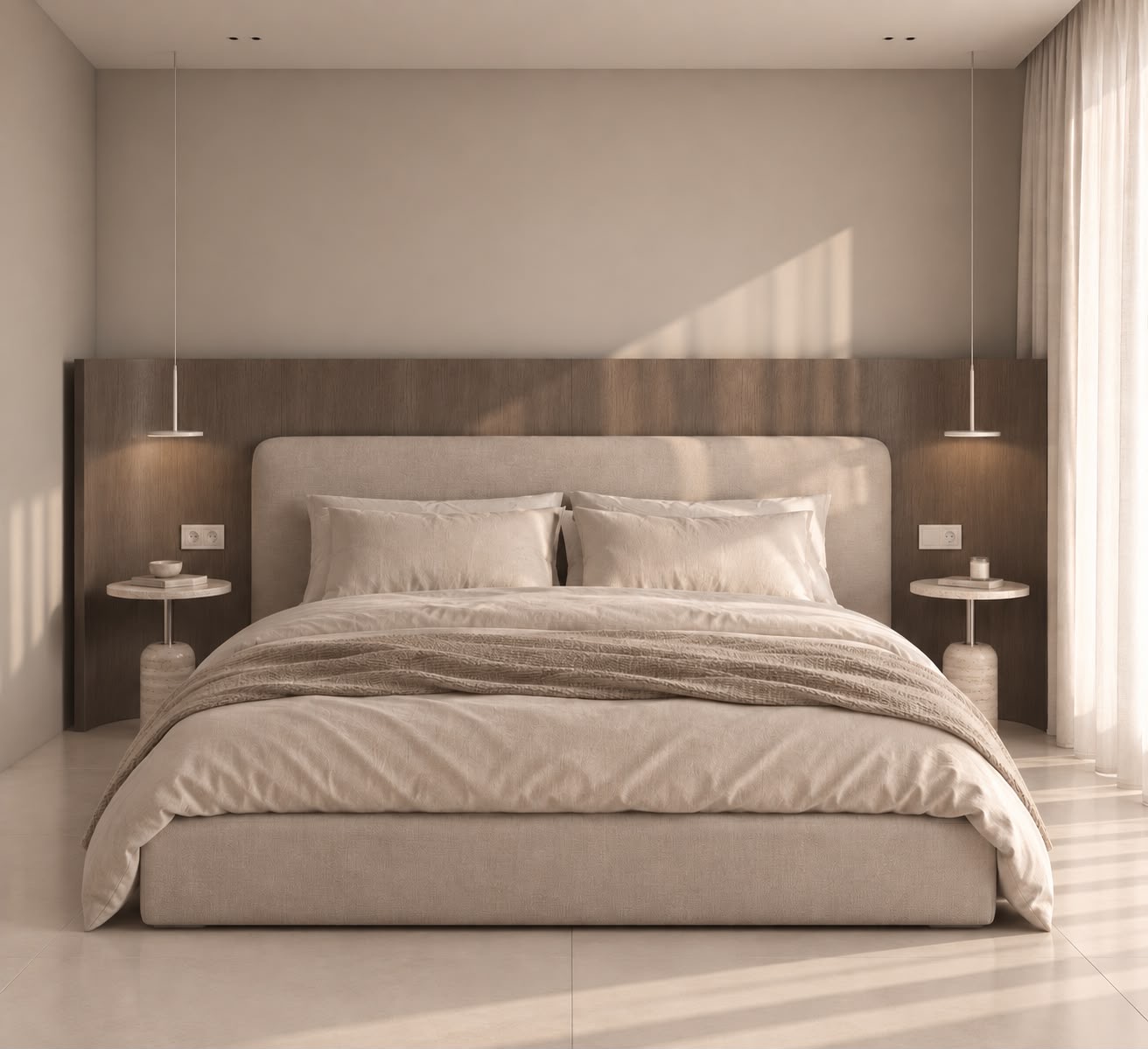
Render 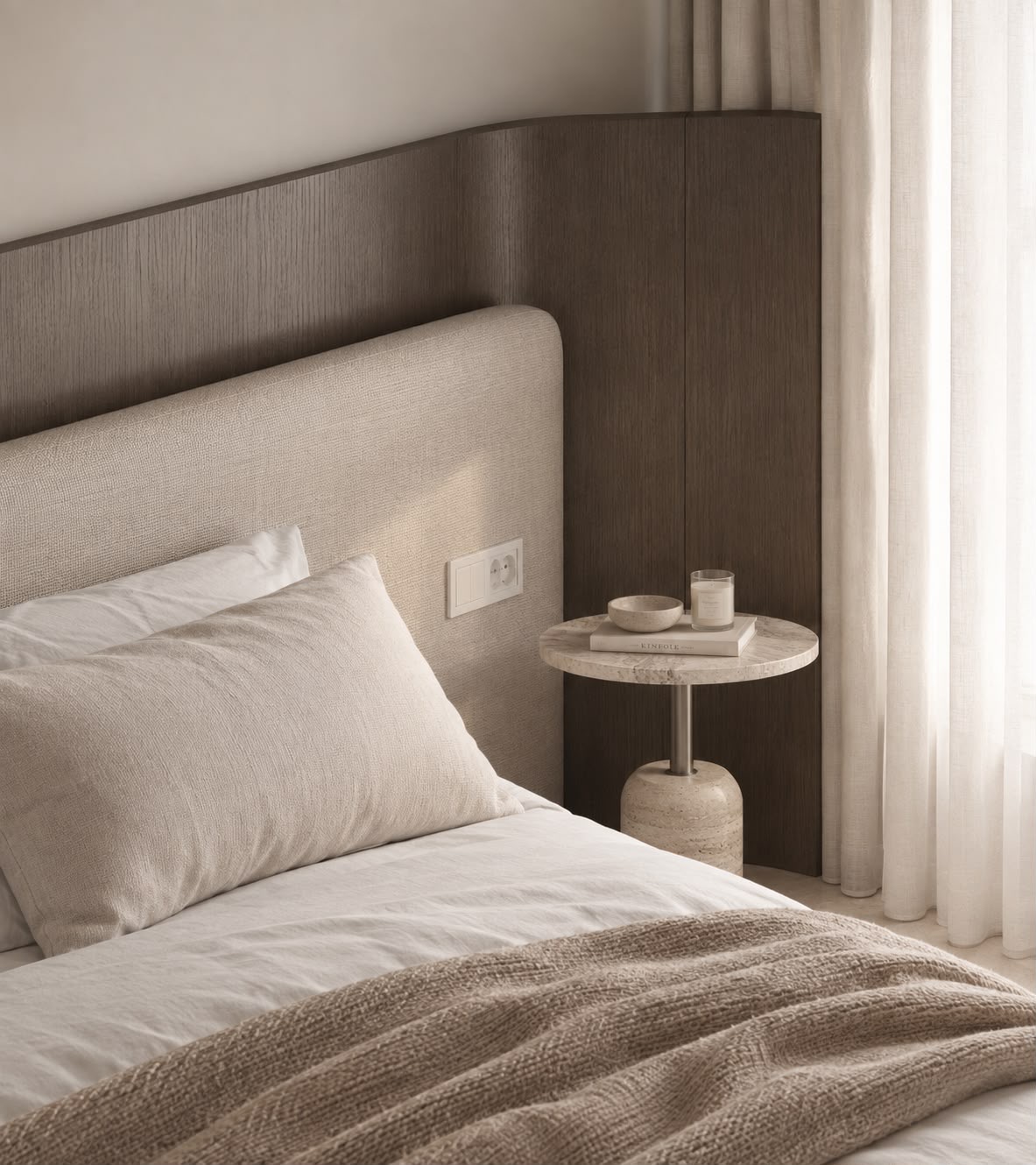
RenderOne soft line in a room that is otherwise straight.


Light: the material you don’t see
In warm minimalism, light is a material in its own right. By day, floor-length sheer curtains in a natural fabric filter the sun and draw lines of light across the floor that move through the day. In the evening, most of the light comes from warm, low sources: backlit niches, LED strips hidden under shelves and behind mirrors, and pendants. A color temperature of 2700K to 3000K is common in living spaces, and the ceiling lights are mainly for tasks and cleaning. We go deeper into layers, color temperatures and placement in the guide to home lighting design.
Three common mistakes
- Beige on beige. Without one dark point and without texture, a warm interior turns flat. Dark oak, walnut or veined stone gives the eye an anchor.
- Too many wood tones. Three different woods that were not planned together look accidental. One light tone and one dark tone, repeated through the home, work better.
- Minimalism without storage. Clear surfaces are the result of cabinetry planned in advance for every object. Without planned joinery, within a few weeks the home becomes an ordinary home with less furniture. How to plan it is covered in the guide to custom carpentry.

The studio’s language
“Clean, precise and right” is how SELÈ STUDIO describes its own language, and it is also a good description of warm minimalism. But a style is a starting point, not a formula. The same palette looks different in an apartment with strong western light and in a house with narrow windows, for a family with small children and for a couple who work from home. The job of design is to translate the language to one particular home and the people who live in it. You’ll find more examples on the projects page.
FAQ
Is warm minimalism a trend that will date?
What dates quickly is usually the fashionable pieces, not the base. Natural materials, a restrained palette and good light depend less on fashion. Invest in the fixed materials, such as stone, joinery and flooring, and leave whatever might date to things that are easy to replace: textiles, tableware and accessories.
Does warm minimalism work in a home with children?
Yes. Closed, planned storage lets toys disappear at the end of the day, and matte wood and stone hide fingerprints better than gloss lacquer. Choose durable fabrics and check the stone’s sensitivity to staining in advance.
Which colors suit warm minimalism?
Off-white, greige, sand, taupe and natural wood tones, with one dark point beside them: deep brown, dark oak or walnut. Avoid cold, bluish whites and many strong colors. Here the tone comes from the materials, not from the paint on the wall.
Can you get to warm minimalism without renovating?
Partly. Start with what needs no building work: clear the surfaces, switch to sheer curtains in a natural fabric, change bulbs to a warm tone and add low lamps, and bring in linen and wool textiles. The depth of the style comes from the fixed materials, such as stone, joinery and wall cladding, and that is where design is needed.
Can light and dark wood be combined in the same space?
Yes, and it is one of the style’s strongest tools. Choose one light tone for the base, such as cabinetry and walls, and one dark tone for the anchor, such as a table or a headboard wall, and repeat them. The two tones should share the same warm undertone, yellowish or reddish, so they read as a pair rather than two woods that met by accident.
Would you like a home that is calm, warm and precise?
Tell us about your home and what you are looking for, and we’ll get back to you to arrange an introductory meeting.